


What is Kundalini Awakening?
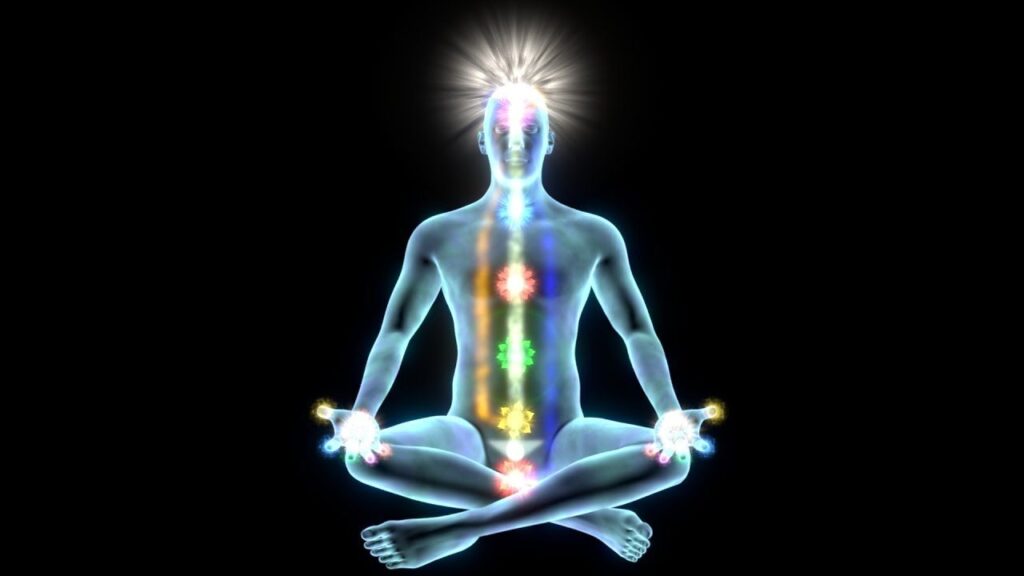
Kundalini awakening is arguably the most important experience in the process of spiritual development, capable of profoundly transforming a person’s life, shattering deeply held beliefs, and triggering major physical, emotional, energetic, and mental transformations, as well as a radical shift in consciousness. During this process, Kundalini energy rises from the root chakra toward the crown chakra at the top of the head, ascending along the spine and through the 72,000 nadis. Traditionally understood as a natural process of purification, Kundalini awakening deeply affects the nervous system, the chakras, and the subconscious mind. Ultimately, Kundalini activation leads to the union of individual consciousness with universal consciousness, fostering spiritual growth and the realization of our true Self.
“Unless the Kundalini is aroused,
spiritual awakening never takes place.”
What is Kundalini Energy?
In yogic traditions, Kundalini is considered a primordial life force present within every human being and every form of life. Kundalini is often symbolized as a coiled serpent and described as a dormant spiritual energy located at the base of the spine, in the Muladhara chakra, which is associated with the Earth element. The word Kundalini comes from the Sanskrit term kuṇḍalini, meaning “the coiled one,” referring to the latent spiritual energy traditionally depicted as serpent power at the base of the spine. When awakened, this energy is said to rise through the chakras, transforming consciousness and leading to profound inner experiences and spiritual awakening.
“Kundalini is the support of
our lives, it is She who makes
everything work in our bodies.”
Why is Kundalini Energy Dormant?
Human beings unconsciously use Kundalini energy every day through the first three chakras (survival, sexuality, and ego) to carry out their daily activities, but also to fuel material desires and attachments to the physical world, like invisible chains keeping them trapped in a material state of consciousness. For most people, Kundalini lies dormant at the base of the spine and remains blocked at this level due to repressed emotions and unresolved inner conflicts resulting from karma and past actions. The gradual release of these blockages in the subtle body allows the energy to flow freely through the upper chakras, helping consciousness expand, activating your life purpose, and initiating a genuine spiritual awakening.
“The mundane aspect of Kundalini
is functioning perfectly, but
the inner aspect is dormant,
sleeping. When the inner Kundalini energy is awakened, it leads
us to the state of the Self.”

What does a Kundalini awakening feel like?
Rising Kundalini can be experienced as an ecstatic surge of energy felt from the base of the spine toward the crown of the head. This experience may feel extremely intense and can be accompanied by various physical sensations symptoms and spiritual effects such as:
- Heat, vibrations, or tingling sensations in the body
- Inner spiritual sounds or heightened sensitivity to sound
- Third eye opening and spiritual visions
- Vivid dreams and astral projection
- Spontaneous body movements known as kriyas
- Intense emotional releases
- Altered perception of time
- Waves of bliss or intense devotion
- Inner silence and mystical experiences
- Expanded states of higher consciousness
- Deep states of meditation known as samadhi
Continue reading: How to manage Kundalini awakening symptoms?

Kundalini Experiences of Spiritual Masters
Regardless of the spiritual tradition, Christian mysticism, Sufism or Advaita Vedanta… remarkably similar accounts emerge around the awakening of Kundalini, often described as an inner experience of overwhelming divine love and complete surrender.
Shri Mataji Nirmala Devi
“I saw the Kundalini rising like a telescope opening out, and then I saw the whole thing open. A torrential rain of light started flowing through my head and everywhere. I felt that I was lost — I was no more. Only grace remained.”
Mother Yvonne-Aimée
“This morning, during Mass, Jesus suddenly took hold of me. Everything disappeared. All I could see and feel was HIM. I no longer realized where I was.”
Saint Theresa of Avila
“I saw in the cherub’s hand a long spear of gold, and at its point there seemed to be a little fire. He appeared to thrust it at times into my heart and pierce my very entrails, leaving me all on fire with a great love of God.”

The Spiritual Purpose of a Kundalini Awakening
The spiritual purpose of Kundalini awakening is to help human beings rediscover the natural state of joy and presence of early childhood, gradually lost through identification with the body during the mirror stage. As the energy rises through the different chakras, it encourages an opening of the heart, an expansion of consciousness, and a deep reconnection with our true nature. Kundalini awakening thus allows us to reconnect with our inner child, rediscover a deeper meaning to our existence by remembering what we truly incarnated for, and gradually free ourselves from the limitations of the ego in order to make peace with ourselves and experience a deep connection with universal consciousness.

What Are the Main Causes of Kundalini Awakening?
Kundalini awakening may occur spontaneously or be triggered by specific spiritual, emotional, or mental conditions. The intensity of certain trauma can also be enough to cause an explosion of prana, causing Kundalini to begin to rise. Let us now explore its main causes:
- 1. Emotional trauma
- 2. Intense mental stress
- 3. Near-death experiences
- 4. Deep trance states
- 5. Intense breathing exercises (pranayama)
- 6. Intensive energy work or yoga practice
- 7. Self awareness and Self enquiry practices
- 8. Use of plant medecine (Iboga, Ayahuasca, Peyote…)
- 9. Prolonged mantra recitation
- 10. Intense devotional practice or prayer
- 11. Shaktipat energetic transmission, darshan, or satsang
- 12. Spiritual transmission received in a dream
- 13. Spiritual grace received in a past life
- 14. Self-realization attained in a past life
- 15. Meditative practices accumulated through previous lifetime
If you wish to awaken Kundalini through meditation and devotion, discover the book “Becoming One with God: A Spiritual Awakening Guide to Realizing Your True Nature“ featuring more than 65 practical exercises and 700 quotes for consciousness awakening and Self-realization (available on Amazon KDP).
How Long Does Kundalini Awakening Last?
Although the complete process of Kundalini awakening may unfold over many years — or even an entire lifetime depending on the intensity of one’s spiritual practice — the Kundalini rising may occur as a brief and intense experience, sometimes followed by several hours of ecstasy. However, the symptoms and side effects related to the intense process of purification that follows may last from a few weeks to several months, depending on the nervous system’s ability to integrate this energetic transformation.
Depending on the depth of unresolved trauma, previous traumatic experiences, and the psychological structure of the individual, the awakening may unfold in a gradual and relatively peaceful manner, while for others it can manifest more dramatically, sometimes taking the form of the Dark Night of the Soul and involving phases of purification, emotional release, and expanded states of consciousness. Ultimately, this process is part of a deeper spiritual path that may lead to real transformation and a profound shift in one’s life experience.
“Make a fiery serpent and set it
on a pole, and everyone who is
bitten, when he sees it, shall live.”
Is Kundalini Dangerous?
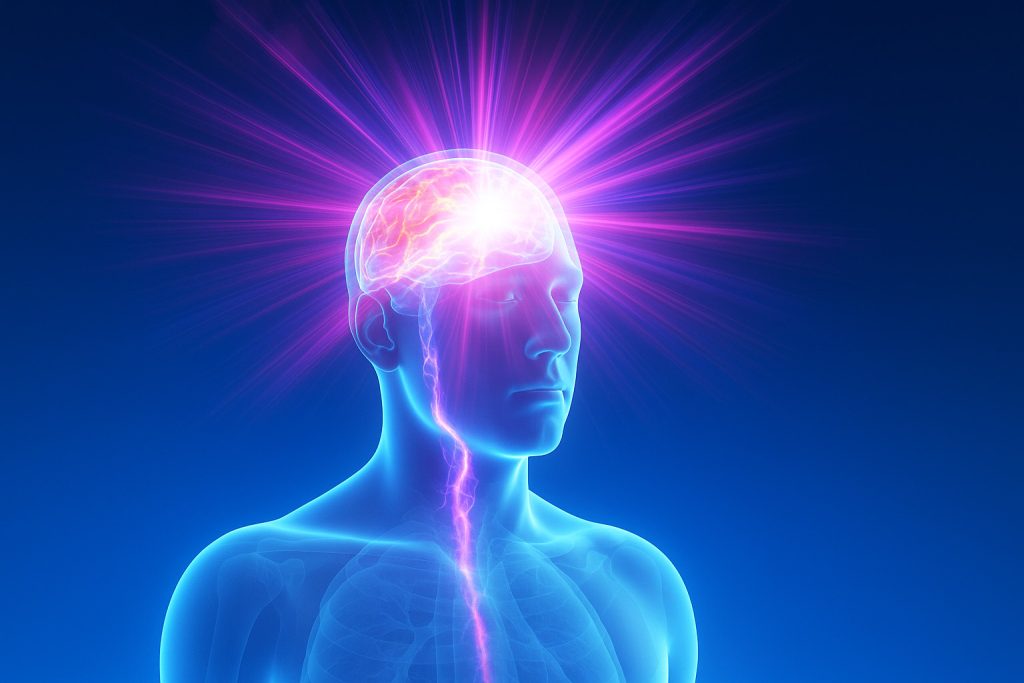
Kundalini is not dangerous in itself, for it is the natural process of awakening your own vital force, as well as the purification of the nervous system and the subconscious mind. However, difficulties sometimes reported on the spiritual journey, such as fatigue, intense emotions, temporary disorientation, muscle spasms, or digestive problems, may arise as part of this intense process of transformation. If the Kundalini activity becomes too difficult to manage, it is generally recommended to temporarily pause intense practices such as Kundalini yoga and instead focus on grounding activities such as walking, gardening, or spending time in nature. In case of a spiritual emergency, do not hesitate to seek guidance from an experienced spiritual teacher or qualified professional.
“Kundalini is your own Mother.
She has been with you through
many lifetimes. It is she who seeks
to bring you enlightenment.
Do you think Kundalini would
harm you, torture you, or cause
you suffering?”
What Happens After Kundalini Awakening?
After a Kundalini awakening, it is common to feel emotionally exhausted, making it essential to give the body and mind time to rest and integrate this profound energetic shift. As this energy continues to work through the nervous system, it is equally important to maintain a healthy lifestyle as well as a certain degree of social and emotional balance, as a natural tendency toward isolation may also arise. It often requires building a steady foundation before attempting intense practices. Developing a regular spiritual practice can also help stabilize the mind and emotions while continuing to nurture the Kundalini energy, particularly through meditation, pranayama, japa mantra, prayer, devotion, or the study of sacred texts.
“Continual devotion is necessary
to keep alive the fire of spirituality.”

Recommended Books on Kundalini Awakening
Here is a selection of recommended books to deepen your understanding of Kundalini awakening. In addition to the study of sacred texts, their reading can also become a meditative practice and support the awakening of your life-force energy.
- 1. Handbook for Shaktipat Initiates, by Jan Esmann
- 2. Kundalini Tantra: Song of Liberation, by Jan Esmann
- 3. Kundalini: The Secret of Life, by Swami Muktananda
- 4. Play of Consciousness, by Swami Muktananda
- 5. Kundalini: The Evolutionary Energy in Man, by Gopi Krishna
- 6. Journey Within, by Shri Mataji Nirmala Devi
- 7. The Power Unknown to God, by Colonel T. Sreenivasulu
- 8. The Kundalini Guide, by Bonnie Greenwell
- 9. Kundalini, the Mother-Power, by Sri Chinmoy
- 10. A Guide to Shaktipat, by Swami Shivom Tirth

Ramana Maharshi was one of the greatest Indian spiritual masters of the twentieth century. As a jnani (knower of the Self), all of his teachings were centered on the Self and the direct inquiry into the pure “I AM.”
In this context, Kundalini was not his primary focus, since all physical, energetic, and mental phenomena were considered secondary compared to Self-realization.
Nevertheless, the subject was frequently brought up by the many visitors who came to Bhagavan throughout his life. Let us therefore explore how Ramana Maharshi responded to questions concerning Kundalini.
Extracts from “Talks with Sri Ramana Maharshi”
Visitor: What part does Kundalini play in bringing about Self-Realisation?
Ramana Maharshi: Kundalini rises from any lakshya (goal) that you have. Kundalini is prana-sakti (life-current).
Visitor: They say that Kundalini must be roused before Realisation and that its awakening makes the body feel hot. Is that so?
Ramana Maharshi: The yogis call it Kundalini Sakti. It is the same as vritti, one of the form of God (Bhagavatakara vritti) of the bhaktas and vritti of the form of Brahman (Brahmakara vritti) of the jnanis. It must be preliminary to Realisation. The sensation produced may be said to be hot. Meditation should remain unbroken as a current. If unbroken it is called samadhi or Kundalini sakti.
Visitor: How to find the Atman?
Ramana Maharshi: There is no investigation into the Atman. The investigation can only be into the non-self. Elimination of the non-self is alone possible. The Self being always self evident will shine forth of itself. The Self is called by different names – Atman, God, Kundalini, mantra, etc. Hold any one of them and the Self becomes manifest. God is no other than the Self. Kundalini is now showing forth as the mind. When the mind is traced to its source it is Kundalini.
Visitor: What is mukhya prana (the chief prana)?
Ramana Maharshi: It is that from which the ego and the prana rise. It is sometimes called Kundalini. Consciousness is not born at any time, it remains eternal. But ego is born; so also the other thoughts. Associated with the absolute consciousness they shine forth; not otherwise.
Kundalini-shakti is One of the Names of the Infinite “I”
Simultaneously another luminous and infinite “I-I” will manifest and it will be continuous and unbroken. That is the goal. It goes by different names – God, Self, Kundalini-Sakti, consciousness, Yoga, Bhakti, Jnana, etc…
Kundalini-shakti is in Everyone:
The kundalinî-shakti is in everyone. When the true nature of this shakti is realized, it is called akhanda-âkâra-vritti (full consciousness) or ahamsphurana (radiance of “I, I”). The kundalinî-shakti is there for every man whatever the path he follows. It is only a matter of appellation.
There is only one Kundalini-shakti:
Shakti has only one phase. If it is said that it manifests in several phases, it is only a figure of speech. There is only one shakti.
Visitor: How concentration is achieved?
Ramana Maharshi: By practice. A devotee concentrates on God; a seeker, follower of the jnana-marga, seeks the Self. The practice is equally difficult for both.
Visitor: Even if the mind is brought to bear on the search for the Self, after a long struggle the mind begins to elude him and the man is not aware of the mischief until after some time.
Ramana Maharshi: So it would be. In the earlier stages the mind reverts to the search at long intervals; with continued practice it reverts at shorter intervals until finally it does not wander at all. It is then that the dormant sakti manifests. The satvic mind is free from thoughts whereas the rajasic mind is full of them. The sattvic mind resolves itself into the Life-current (kundalini-shakti).
Visitor: Can one keep the mind away from entering into the phase of thoughts before one experiences the current?
Ramana Maharshi: Yes; the current (kundalini-shakti) is pre-existent.

Book a Kundalini Support Session
If you are beginning a Kundalini awakening, going through an intense phase of inner transformation, or simply wish to receive guidance during this process, I offer one-on-one spiritual guidance and Presence-based meditation sessions.
These sessions will help you:
- Better understand and integrate your experience
- Learn to meditate and structure your spiritual practice
- Continue awakening your Kundalini safely
- Stabilize Kundalini symptoms
- Restore emotional and mental grounding
- Expand your consciousness
- Reconnect with your true Self